Native or Non Native Wildflowers? Growing For Pollinators Without The Guilt
I posted on social media recently about my collaboration with a wildflower seed manufacturer and was suprised by a particularly stong response from someone about whether they are native or non native wildflower seeds to the UK. I suddenly found myself unexpectadly in the centre of a polorising debate.
Call me naive, but in my eyes, more wildflowers = more pollinators, hence my simple (audacious?) mission to grow an extra one billion wildflowers in the world.
I decided to step away from the purist perspectives and I interviewed Karen Daniels who is an expert in Environmental Social Governance to hear her perspective and was delighed that she shares my pragmatic approach.
Karen says:
"I’ve spent most of my career in ESG, so I’m used to asking what the evidence says. I wanted a garden full of bees. I also wanted it full of poppies that aren’t from here.
For a while I felt like a hypocrite. Wildflower circles can get a bit tribal about native versus non-native, so I went looking for what the evidence says and the findings are kinder than the debate.
What the research says
The RHS ran a four-year study called Plants for Bugs. They planted three types of border: British native plants, plants from elsewhere in the northern hemisphere and southern hemisphere exotics. Then they counted what turned up.
It turns out that a mix works best. Native plants and their northern hemisphere cousins gave pollinators the most reliable food. Southern hemisphere plants held their own too, mostly because they flower late. They keep nectar coming when native plants have gone to seed.
What I found particularly useful to know is that the average UK garden is roughly 70% non-native. Whatever the plant’s origin, more flowers meant more bees, hoverflies and butterflies.
Flower count and flowering across the whole season, mattered more than the plant passport.
Where native wins
Natives still earn their place. They support more of the other creatures in your garden, the beetles and bugs living on the leaves and at ground level. They suit our soil and weather. They are the right backbone for a wildflower patch.
If you are sowing a meadow, start native. Buy seed from a reputable UK supplier, and check where the seed was grown, not just what the packet says.
Where non-natives help
Non-natives fill the gaps. Early spring and late autumn are lean times for insects. A few well-chosen plants from further afield can bridge those gaps.
However, ensure that you avoid anything known to spread aggressively into the wild. And double flowers look lovely but often lock the nectar away from insects, so make sure you have plenty of open single flowers in your mix.
Why non-natives matter more in a changing climate
Our seasons are shifting and they will likely continue shifting. Researchers at Cambridge looked at 420,000 first flowering dates for over 400 UK species. The average first flowering date has moved from around 12 May to 16 April since 1986. That’s about a month earlier.
Insects don’t always move at the same pace. If a bee wakes up after early flowers have gone, it goes hungry. Scientists call this ‘ecological mismatch’. Some UK wildflowers are now blooming at New Year and we’re even seeing early spring bulbs coming up in November and December.
I don’t think non-natives fix ecological mismatch entirely, but they do give pollinators more options. A plant from a warmer climate may flower later or hold up better in a dry summer. Kew and the Woodland Trust both suggest a diverse mix, including drought-tolerant plants alongside natives. Think of non-natives as a safety net, not a replacement.
What I’m doing at home
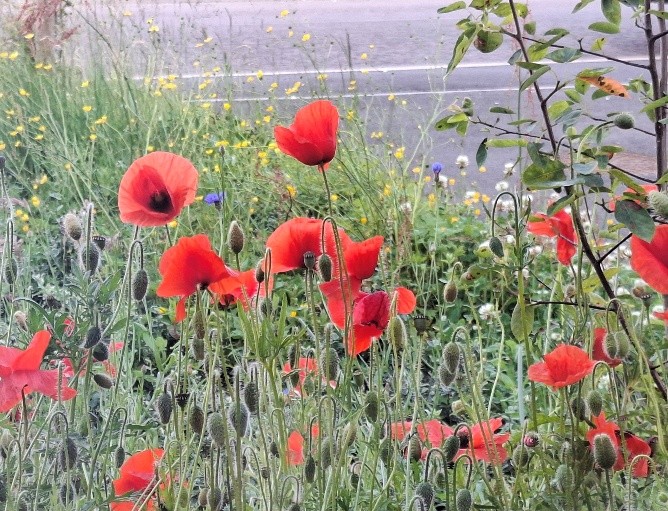
My front garden has a 4 m² south-facing patch on clay, the ground went rock hard this summer - a typical gardener’s nightmare but in spring I sowed poppies and cornflowers straight onto it. They did brilliantly. Both are old arable weeds that have been part of our countryside verges for centuries so they’re pretty tough and don’t want too much attention.
This autumn I’ve added oriental poppy and a Hungarian blue poppy. Neither is native but they’re both pollinator friendly. They’ll sit alongside a wild lawn, tufted hairgrass and daffodils, crocuses and irises for early spring. The aim is something is always in flower.
I’m even sowing Salvia viridis in March too. It’s Mediterranean, so not native, but it is a close cousin of our own rare meadow clary. It flowers through summer and gives me colour right when the early patch is fading.
Gifts from nature
Not everything in my patch came from a seed packet. Buttercup, sorrel, Ribwort plantain and flax were gifts from nature. I mostly left them alone. As Monty Don says, you can always edit things out later.
Creeping buttercup is a UK native and it’s on the RHS Plants for Pollinators list. The open, flat flowers give nectar and pollen to short-tongued bees, hoverflies and butterflies. It isn’t the busiest flower in the garden, but it earns its place. It does spread fast on damp ground and can smother smaller plants, so I keep an eye on it and pull some of the creepers out when it starts to take over… But it does look beautiful!
Sorrel and Ribwort Plantain are different. They’re wind pollinated and make no nectar, so it’s no use to a bee. They still matter though, because Ribwort Plaintain is the main caterpillar food plant for the small copper butterfly. Both plants also support over 50 species of beetles, flies and bugs, especially butterflies and moths. Small copper caterpillars overwinter near the base of the Sorrel plant. Butterfly Conservation records a 16% drop in the butterfly’s distribution since the 1970s so the more of the less pretty natives we can leave in, the better chance of recovery for the crawlies.
Flax is the easy one to love. Mine is pale flax, Linum bienne, a native with dainty pale blue flowers and darker veins. It likes dry, sunny spots, which suits my south-facing patch. Bees and other insects pollinate it.
A pollinator-friendly garden feeds the caterpillars and the birds too, blue tits, in particular, rely on caterpillars to feed their chicks.
A simple way to decide
Make natives the backbone.
Add non-natives to extend the season, not replace the natives.
Grow one or two rarer natives if you have the right conditions. Buy seed or plants from a reputable supplier.
Leave a few gifts from nature, like sorrel for small copper caterpillars.
Plant generously. Bare soil feeds no one.
Watch what your pollinators visit, then grow more of it.
Let some leaves get nibbled and leave a bit of mess.
You don’t need to pick a side. You need flowers, from early spring to the first frosts. Start with a pot or one square metre and start with providing a rest stop for nature."
Thank you Karen for your love of nature, your ability to bridge the gap from environment needs to corporate goals.
Karen Daniels is the founder of Sustly Business Solutions, providing fractional solutions and consulting to small and growing businesses. You can find out more about her services below.
If you would like to join my mission to grow one billion extra wildflowers in the world, you can join here. If you are in the UK, you can buy wildflower seeds witout the guilt here.